Two hundred years of one house

The history of the Pass estate reaches back to the thirteenth century and the monastery of canons regular at Czerwińsk. The palace you visit today was built in 1830. Below are the main chapters of that story.

from the 13th c.

An estate of the Czerwińsk monastery

From the end of the thirteenth century the Pass estate probably formed part of a large group of properties belonging to the monastery of canons regular at Czerwińsk, and specifically to its branch house at Błonie.
18th century

A summer residence for the abbots

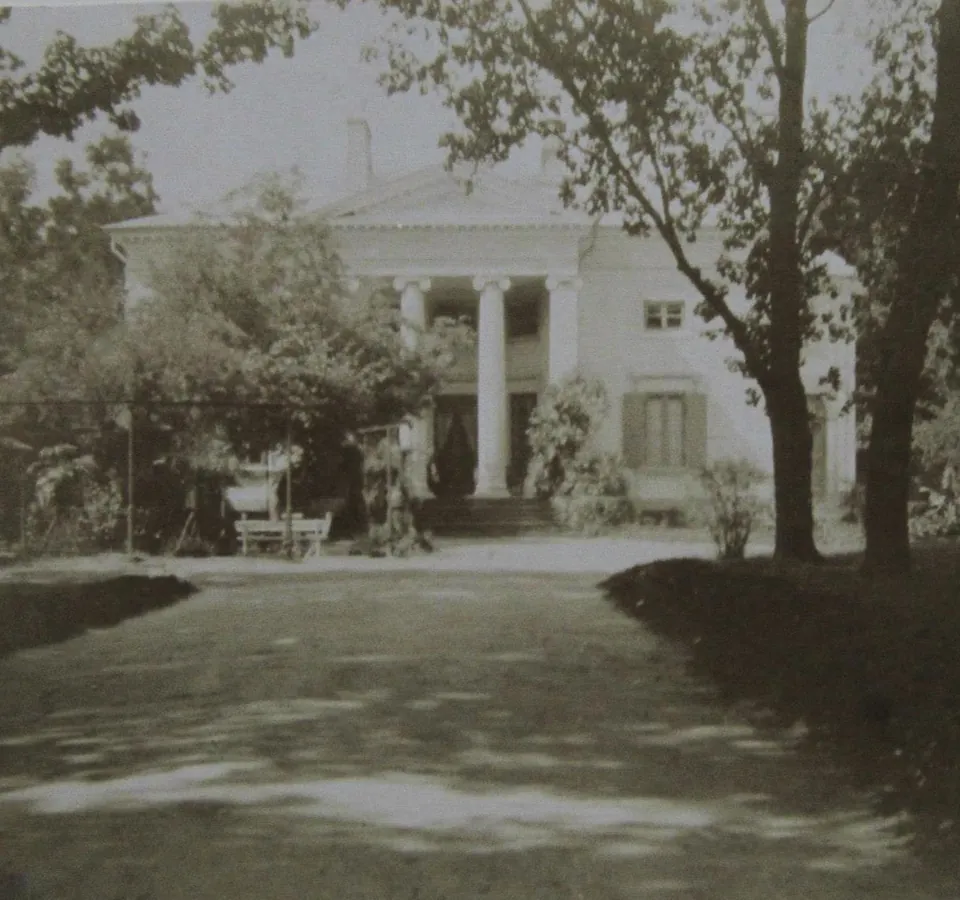
In the eighteenth century Pass was the summer seat of the Czerwińsk abbots. An inventory of 1788 describes a large single-storey manor, of timber on masonry footings, with two brick chimneys and a shingle roof. Numerous alterations and additions were made in 1784 by the Czerwińsk abbot Kraszewski.

1807

Napoleon at Błonie

One of the best known legends about the name Pass holds that the Emperor Napoleon Bonaparte left his military belt (in Polish, pas) as he passed through the village. What is certain is that Napoleonic troops were stationed here, and that on 1 January 1807 Napoleon stopped at the inn at Błonie, where he first saw Maria Walewska.

1830

Jan Henryk Geysmer builds the palace

In 1830 the estate was bought by Jan Henryk Geysmer (1780–1835), a wealthy Warsaw industrialist who had come from Hamburg. The palace was built under his direction. The design is attributed to Piotr Aigner, much admired at the time, whose other works the building closely resembles.

1837

The banker Ludwik Halpert

Ludwik Halpert, a Warsaw banker, acquired the palace at auction in 1837. In 1864 he was granted hereditary nobility of the Kingdom of Poland with the Halpert arms.

1840s

The interiors rebuilt, and a theatre

The rebuilding of the interiors was designed by the architect Adolf Schuch. He altered the arrangement of the rooms, the entrance to the ballroom and the staircase, and converted one room in the west wing into a theatre with a stage carried on two Corinthian columns.

1836–1851

Leontyna Halpertowa

The stage was built for Leontyna Halpertowa, née Żuczkowska, considered one of the finest actresses of her age. Away from the noise of the city she could rehearse her roles here in peace.

1891

The sisters Anna and Luiza Halpert

After the death of Henryk Ludwik Halpert, Pass passed to his sisters Anna and Luiza, who ran the estate admirably. A family visit in 1910 was described in her diary by Beatrix de Halpert: “Pass and the gardens are charming.”

1932–1944

Ziemowit Jasiński

The last private owner of the palace. He built a solid brick wall, repaired the roof, installed a bathroom and put in drainage. In front of the palace he laid out a bed of roses with a stone sundial at its centre.

1946–1990

Difficult decades

In 1946 the estate passed to the State Treasury and was handed to a plant breeding station. In the 1980s the palace housed a college of social sciences, and in the 1990s it was taken over by Bank Polska Kasa Opieki S.A.

2004

The Warter Group

The palace passed to the Warter Group, which set out to restore the monument to its former glory. Ziemowit Jasiński visited the palace for the last time in 2004, speaking with the new owner and expressing his satisfaction at the work begun.

2011

Former splendour regained

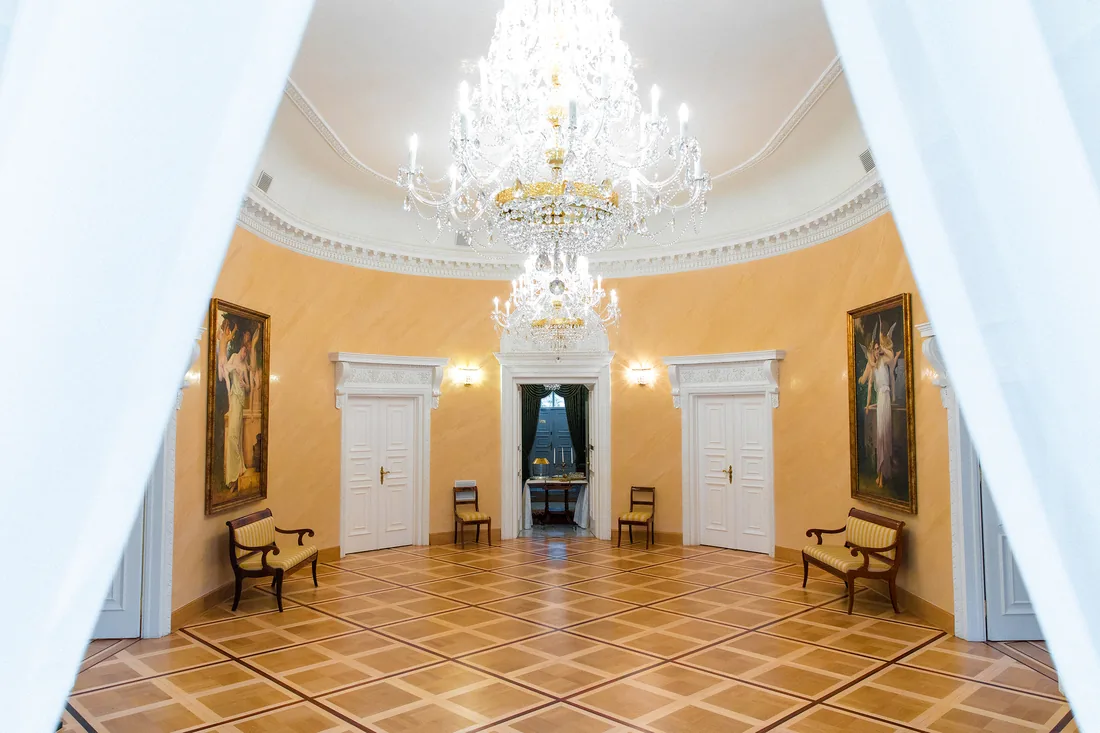
The restoration was completed. Restored with great care, the palace combines neoclassical models with contemporary technical solutions, and the palace and park complex at Pass returned to the map of neoclassical monuments in Mazovia.

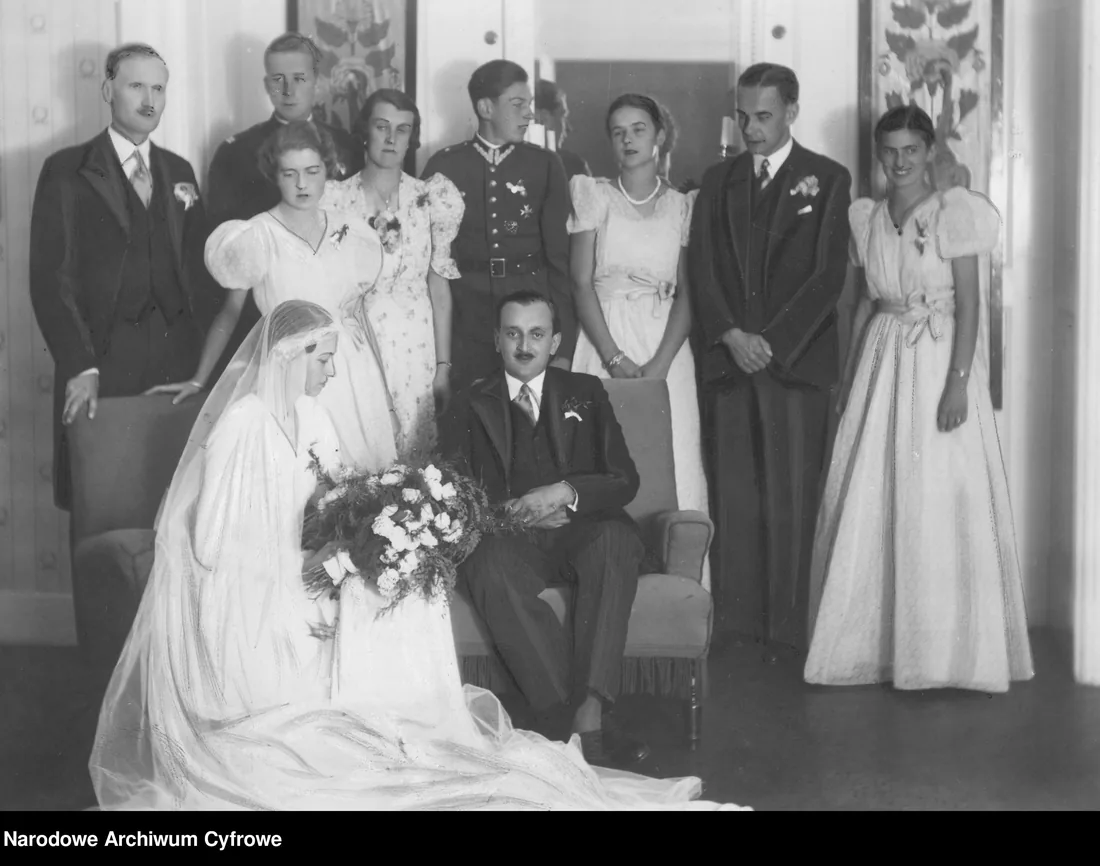
An archive wedding photograph from the Polish National Digital Archive

The park returns to form

For many years work has been under way to restore the park itself, which stands out among the gardens of the so-called Kampinos group. In the care of its protected trees we are supported by the Environmental Protection Department of the Błonie town council. Given the scale of the neglect, this is work spread over many years.

See all photographs